Top surgery in Mexico City: a complete guide for FTM and non-binary patients
Techniques, candidacy, consultation, week-by-week recovery, scars, cost and travel from the U.S. A top surgery guide written by a board-certified surgeon trained at Mount Sinai.
 Dra. Yolotzin Méndez AguilarBoard-certified plastic surgeon · CMCPER 2583
When a patient comes to me for top surgery, they rarely ask “what is it?”. They have done their research, seen photos and talked to friends who had it done. What they want to know is whether they are in good hands, which technique is right for them and what the following weeks will look like. This guide answers exactly that, the way I explain it in consultation.
What top surgery is
Top surgery, also called chest masculinization, masculinizing mastectomy or subcutaneous mastectomy, removes breast tissue and excess skin to create a flat chest with a masculine contour. It almost always includes repositioning and reducing the areola and nipple so they have masculine proportions.
It is not an oncologic mastectomy: the goal is not only to remove tissue but to sculpt a chest. That is why the surgeon’s technique and aesthetic judgment matter so much.
The two main techniques
Periareolar
Tissue is removed through an incision around the areola. Scars are minimal and nipple sensation is usually better preserved. The limit is clear: it only works for small chests with elastic skin. On a larger chest the excess skin does not retract and the result is not flat.
Double incision with free nipple grafts
This is the most widely used technique worldwide for medium and large chests. An incision is made along the lower border of the pectoral muscle, tissue and excess skin are removed, and the nipple is placed as a graft in its new position, already reduced. It leaves a horizontal scar following the pectoral line and gives a flat, defined contour. Nipple sensation is lost to a greater degree.
With either technique I can add lateral liposculpture to refine the transition between the chest and the armpit, which is where many results look “unfinished”.
Neither you nor I choose the technique by preference: your anatomy decides. In the consultation we review chest size, skin quality and nipple position, and I show you what to expect from each option.
Who is a candidate
- Trans men and non-binary people seeking a masculine or flat chest.
- People with or without hormone therapy: you do not have to be on testosterone to have surgery. If you are on treatment, we coordinate with your endocrinologist.
- People in good general health. Smoking increases the risk that the nipple graft does not take, so I will ask you to stop before and after surgery.
The consultation
I follow the WPATH Standards of Care (World Professional Association for Transgender Health). In the first consultation:
- We review your medical history, tests and, if applicable, your hormone treatment.
- We examine your chest and choose the technique.
- We talk about documentation: depending on your case and current guidelines, a mental health support letter may be recommended. If you need one, we guide you in obtaining it.
- You receive a fixed written quote.
From the very first call we use your name and pronouns. I am a clinical partner at CETRANS and support trans and non-binary people through their process; respectful care is not an extra, it is part of the procedure.
Surgery day
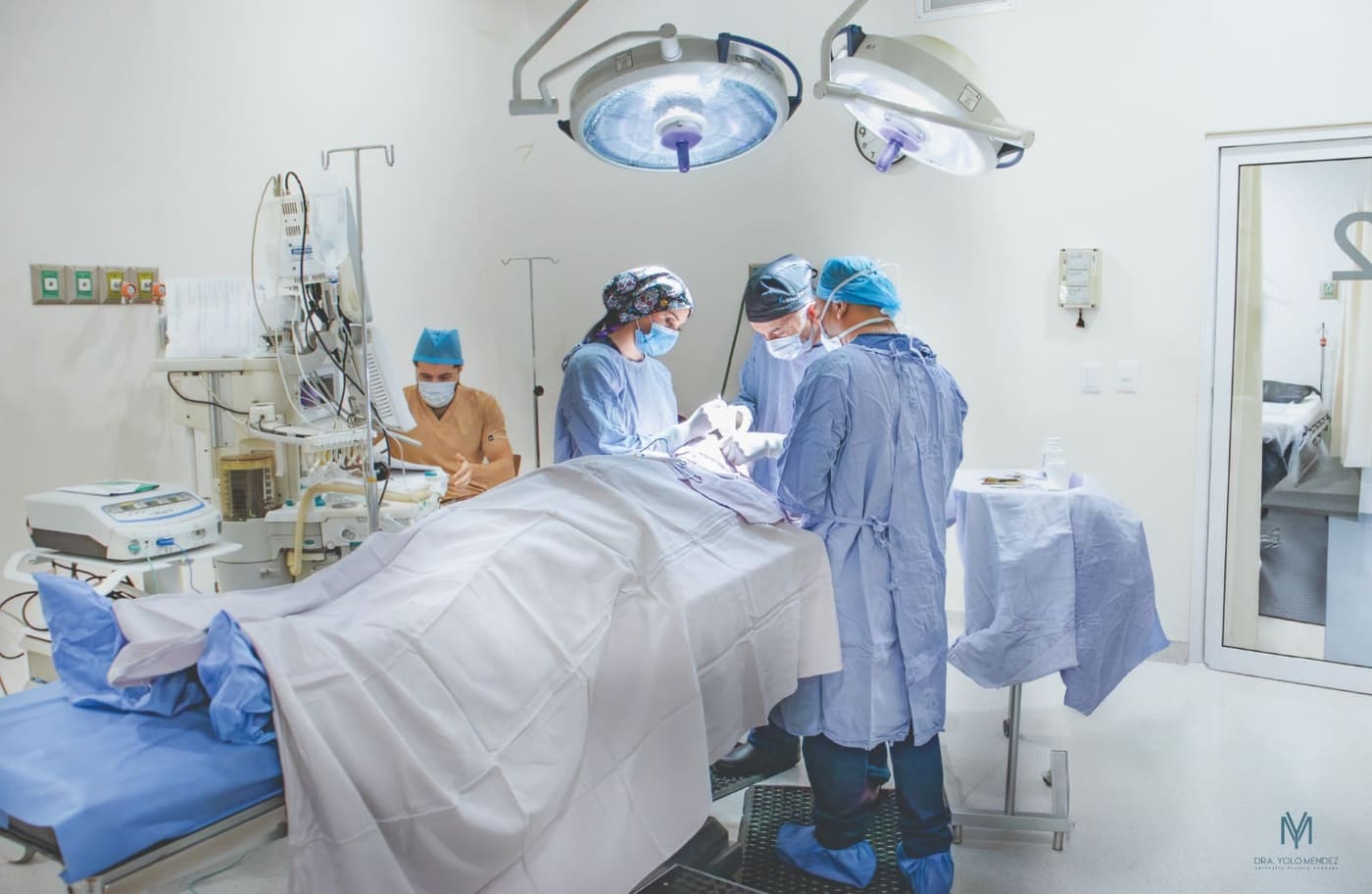
Surgery takes 2 to 3 hours under general anesthesia, followed by one night in the hospital. You leave with a compression dressing and drains, which we remove during the first week.
Recovery week by week
Days 1 to 3. Compression dressing and drains. You rest with your arms close to your body. Expect discomfort, more tightness than pain, controlled with medication.
Week 1. Drain removal and nipple graft check. Light activity and walking are fine. Graft dressings are changed during the first two weeks.
Weeks 2 to 4. You wear a compression vest during the day. You can return to desk work around day 10, without physical effort. No lifting your arms above shoulder height and no chest exercise during the first month.
Month 3. You gradually start chest exercise. This is when your chest starts to look the way you pictured it: the pectoral muscle shows and the contour defines.
Month 12. Scars finish maturing, going from pink to pale and flat.
Scars and nipples: what to know
- The double-incision scar is visible, but it is designed to follow the lower border of the pectoral muscle, where it blends with masculine anatomy.
- Scar care (silicone, sun protection) during the first year makes a real difference.
- With free grafts, the nipple may lose sensation and, in uncommon cases, the graft may not fully take. We discuss this openly before deciding.
Risks
Like any surgery, top surgery has risks: hematoma, changes in sensation, partial loss of the nipple graft and thicker-than-expected scars. That is why we operate in a certified hospital operating room, with personal follow-up throughout your recovery.
How much does top surgery cost in Mexico?
The cost depends on:
- The technique (periareolar or double incision).
- Chest size and whether lateral liposculpture is added.
- The surgical team, the hospital and the overnight stay.
You receive a fixed written quote after your consultation, with no hidden costs, and you can finance your surgery with Heva, a platform based in New York built for patients living in the United States.
Traveling from the United States
- Video consultation first. We review your case, photos and history before you book a flight.
- Plan about one week in the city. Stay until drains are removed and your first check-up; later follow-up can be done remotely.
- Easy to reach. Mexico City has direct flights from major U.S. cities, and Saltillo is about three hours from the Texas border.
- Verifiable credentials. My board certification can be checked in the public directory of the Mexican Council of Plastic, Aesthetic and Reconstructive Surgery (CMCPER).
Why Dr. Yolotzin
- I trained in chest masculinization at The Mount Sinai Hospital in New York (WPATH program, 2018).
- I am board-certified by the CMCPER, the Mexican board of plastic surgery.
- I am a clinical partner at CETRANS and operate with a team that knows and respects your process.
If you are thinking about top surgery, the first step is a no-commitment consultation: we review your case, I explain the technique that suits you and you leave with a clear plan.
This article is informational and does not replace a medical consultation. Results and recovery times vary from person to person.